What Does Creatinine 3.0 Mean in Cats?
Your vet just called with bloodwork results. They said your cat's creatinine is 3.0 mg/dL, and they want to talk about “chronic kidney disease.” Maybe you've already heard that term, or maybe it's completely new. Either way, that number — 3.0 — probably feels scary and abstract. What does it actually mean for your cat? How bad is it? And most importantly, what can you do about it?
In this article, we'll break down what creatinine is, how it relates to kidney function, where 3.0 falls on the IRIS staging system, and what steps you should take next. Understanding these numbers is the foundation of being an effective advocate for your cat's care.
Feline Creatinine: What the Numbers Mean
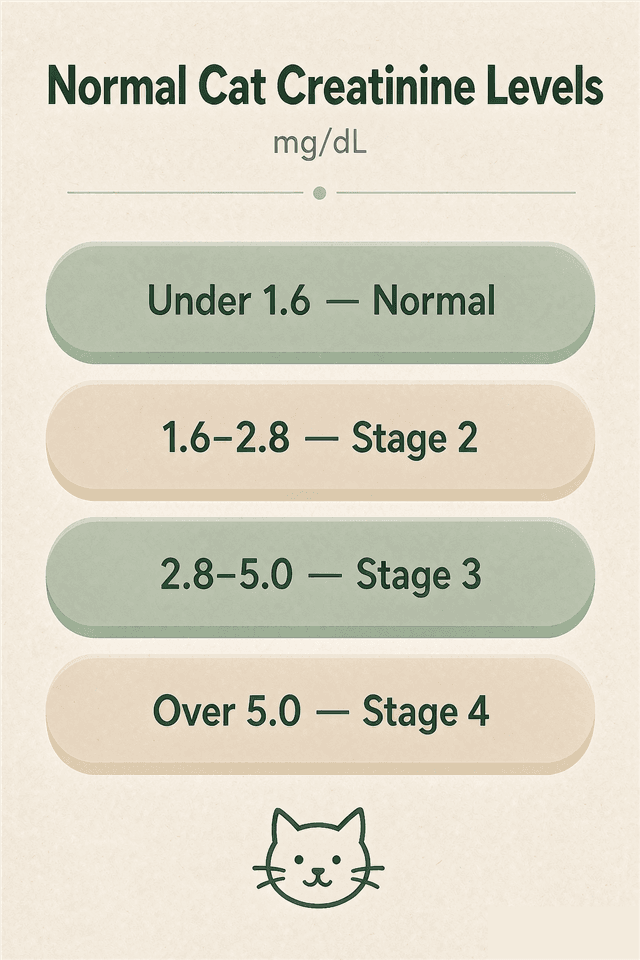
Feline creatinine is a blood-test value that tells you how well your cat's kidneys are filtering waste from the bloodstream. It is measured in mg/dL, and a healthy cat typically runs below 1.6 mg/dL. According to the IRIS staging system, cats with creatinine between 1.6 and 2.8 are Stage 2, 2.9 to 5.0 is Stage 3, and above 5.0 is Stage 4. Creatinine starts climbing only after at least 75% of kidney function is lost, so an elevated feline creatinine result almost always means the disease is already moderate to advanced. The number is a marker, not a toxin — chasing a lower number is not the goal. The real goal is to support hydration, control phosphorus, manage blood pressure, and keep your cat eating well.
Normal Creatinine Levels in Cats
Normal creatinine levels in cats are below 1.6 mg/dL on a standard blood chemistry panel. Some labs use a slightly different interval (often 0.3 to 2.0 mg/dL), so always check your cat's specific lab's reference range before interpreting the result. Anything consistently above 2.0 mg/dL is considered abnormal and warrants investigation, especially when paired with elevated BUN, dilute urine, or any clinical signs. The IRIS staging system divides elevated creatinine as follows: Stage 2 is 1.6 to 2.8 mg/dL, Stage 3 is 2.9 to 5.0 mg/dL, and Stage 4 is above 5.0 mg/dL. A single mildly elevated reading is not always CKD — dehydration, urinary obstruction, or a high-protein meal before the blood draw can temporarily raise creatinine. That is why your vet will typically retest in 2 to 4 weeks to confirm a true trend before changing your cat's care plan.
What Is Creatinine and Why Do We Measure It?
Creatinine is a waste product generated by normal muscle metabolism. Every time your cat's muscles move — even just breathing — a small amount of creatinine is produced. In a healthy cat, the kidneys filter creatinine out of the blood and excrete it in urine. When the kidneys aren't working properly, creatinine accumulates in the bloodstream. That's why blood creatinine level is one of the most common and reliable markers of kidney function.
It's important to understand that creatinine doesn't cause damage — it's a marker, not a toxin. High creatinine tells you the kidneys aren't filtering well, but the creatinine itself isn't what makes your cat sick. This is why simply “lowering creatinine” isn't the goal — the goal is to support kidney function and manage the factors that actually affect your cat's wellbeing, like hydration, blood pressure, phosphorus, and appetite.
Normal creatinine for a cat is typically below 1.6 mg/dL (some labs use slightly different reference ranges). Anything above 2.0 mg/dL is generally considered abnormal and warrants investigation. But a single elevated reading isn't always CKD — dehydration, urinary obstruction, or even a high-protein meal before the blood draw can temporarily raise creatinine. That's why your vet will likely recommend retesting after a few weeks to confirm the trend.
The IRIS Staging System Explained
The International Renal Interest Society (IRIS) has created a standardized staging system for CKD that veterinarians worldwide use. It divides CKD into four stages based on blood creatinine levels, with additional modifiers based on blood pressure and urine protein levels. Understanding your cat's stage helps you know what to expect and what interventions are appropriate.
| IRIS Stage | Creatinine (mg/dL) | What It Means |
|---|---|---|
| Stage 1 | < 1.6 | Early kidney changes; often no symptoms yet |
| Stage 2 | 1.6 – 2.8 | Mild CKD; subtle signs like slight weight loss |
| Stage 3 | 2.9 – 5.0 | Moderate CKD; noticeable symptoms appear |
| Stage 4 | > 5.0 | Advanced CKD; significant intervention needed |
A creatinine of 3.0 mg/dL puts your cat in Stage 3 (Moderate CKD). The Stage 3 range is 2.9 to 5.0 mg/dL. At this stage, your cat has lost approximately 75% or more of kidney function. This sounds alarming, but cats can live comfortably for months to years at Stage 3 with proper management — diet, hydration, medication, and regular monitoring.
What Other Numbers Matter?
Creatinine is important, but it's not the only number that matters. Your vet likely ran a full blood panel and urinalysis. Here are the other key values you should understand:
SDMA (Symmetric Dimethylarginine)
SDMA is a newer biomarker that can detect kidney dysfunction earlier than creatinine — often when only 40% of function is lost, compared to 75% for creatinine. If your cat's SDMA is elevated but creatinine is still normal, that's an early warning sign. SDMA above 14 µg/dL is generally considered abnormal. Some vets now run SDMA as part of routine senior bloodwork for exactly this reason. (We cover SDMA's normal ranges, the IRIS SDMA stages, and how to respond in our complete guide to SDMA in cats.)
BUN (Blood Urea Nitrogen)
BUN measures urea, another waste product filtered by the kidneys. Like creatinine, it rises when kidney function declines. However, BUN is more easily influenced by diet and dehydration, so it's less specific than creatinine. A high BUN with normal creatinine may simply mean your cat ate a high-protein meal or was slightly dehydrated during the blood draw. (We cover this number — and how to bring it down — in our complete guide to high BUN levels in cats.)
UPC (Urine Protein-to-Creatinine Ratio)
This measures protein loss through urine. A UPC above 0.4 in cats suggests proteinuria — protein leaking into urine because the kidney's filtering units are damaged. Proteinuria is an important prognostic indicator: cats with persistent proteinuria tend to progress faster, and your vet may recommend medication (typically an ACE inhibitor like benazepril or an angiotensin receptor blocker like telmisartan) to reduce protein loss.
Phosphorus
Blood phosphorus is critical to track because, as mentioned in our renal diet comparison, high phosphorus actively accelerates kidney damage. IRIS has specific phosphorus targets for each stage, and your vet will recommend dietary changes or phosphorus binders if levels are too high.
What to Expect at Stage 3
At Stage 3, you'll likely start seeing noticeable symptoms. These may include increased drinking and urination (your cat may suddenly start visiting the water bowl frequently or producing larger urine clumps in the litter box — read more about why increased thirst is a CKD warning sign), weight loss despite eating normally, decreased appetite, occasional vomiting, lethargy, and poor coat condition.
Your vet will likely recommend: switching to a prescription renal diet (see our Hill's vs Royal Canin comparison), bloodwork every 2-3 months to monitor trends, possibly starting subcutaneous fluids at home (our SQ fluid guide covers this in detail), and medications as needed for blood pressure, nausea, or phosphorus control.
What You Can Do Right Now
If your cat's creatinine is 3.0, here are the immediate steps: schedule a follow-up to confirm the result (rule out dehydration or transient causes), ask your vet about SDMA and UPC if they haven't been tested, discuss transitioning to a renal diet, start tracking your cat's water intake and litter box habits, and consider investing in a pet water fountain to encourage hydration. Most importantly, don't panic — Stage 3 is manageable, and many cats live well for years with proper care.
How to Lower Creatinine Levels in Cats
How to lower creatinine levels in cats comes down to five evidence-supported moves your vet will typically combine. First, switch to a prescription renal food (Hill's k/d or Royal Canin Renal) — prescription diets lower creatinine by an average of 0.5 to 1.0 mg/dL within 4 to 8 weeks in compliant cats. Second, maximize hydration: fresh water fountains, wet food, and subcutaneous fluids (typically 100 mL every other day for Stage 3) all flush creatinine out through the kidneys. Third, add a phosphorus binder if blood phosphorus is above IRIS targets — high phosphorus accelerates kidney damage and keeps creatinine elevated indirectly. Fourth, treat nausea with mirtazapine or ondansetron so your cat keeps eating; appetite loss leads to muscle wasting, which itself raises creatinine. Fifth, control blood pressure with telmisartan or benazepril — uncontrolled hypertension damages the kidney's filtering units and worsens creatinine. These five interventions together typically bring creatinine down by 0.3 to 1.5 mg/dL over 1 to 3 months in early-to-mid stage cats. Talk to your vet before making changes — what works for Stage 2 may not be appropriate at Stage 3 or 4.